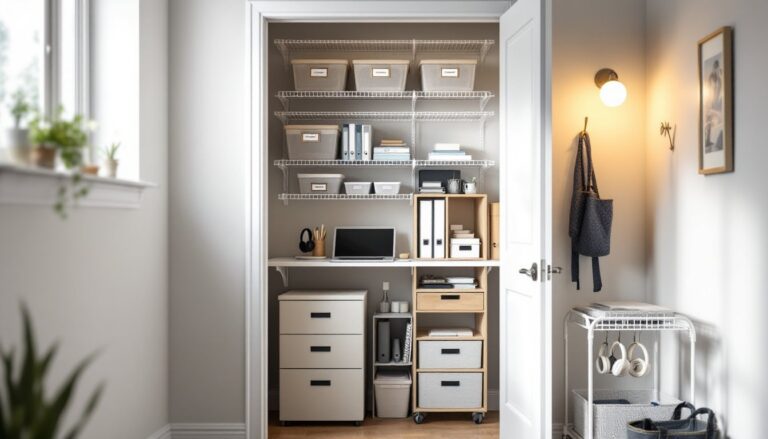
A cluttered office closet isn’t just an eyesore, it’s a productivity drain. When filing cabinets overflow, supplies disappear, and archived projects bury the essentials, every search for a stapler becomes a five-minute detour. Whether working from a dedicated home office or a converted spare bedroom, most homeowners underestimate how much functional storage a well-organized closet can provide. The right shelving, drawer systems, and filing solutions turn wasted vertical space into a command center for office supplies, reference materials, and equipment. This guide walks through the assessment, installation, and maintenance steps to build an office closet that actually works, without requiring a complete renovation or professional organizer.
Table of Contents
ToggleKey Takeaways
- Office closet organization reduces retrieval time and cognitive load, directly boosting productivity for remote workers and home office users by making supplies and documents accessible in seconds instead of minutes.
- Proper weight distribution and structural support are critical—standard closet shelving supports 25-50 pounds per linear foot, while heavier items like filing cabinets require reinforced shelving anchored into wall studs rated for higher loads.
- Vertical filing systems and adjustable shelving transform unused closet space into functional storage by maximizing height, keeping daily-use items at eye level, and storing archived materials on upper shelves.
- A step-by-step installation process—measuring first, installing structural components before accessories, and labeling everything—prevents costly mistakes and ensures your office closet organization system actually works long-term.
- Maintenance through quarterly audits, a one-in-one-out supply rule, and immediate problem-solving prevents even well-designed office closets from reverting to chaos within months.
Why Office Closet Organization Matters for Productivity
Disorganization costs time and mental energy. Studies show cluttered workspaces increase cognitive load, making it harder to focus on complex tasks. When office supplies scatter across shelves, file folders stack horizontally instead of vertically, and equipment cables tangle behind boxes, the closet becomes a liability rather than an asset.
A properly organized office closet reduces retrieval time. Instead of digging through three banker’s boxes to find last year’s tax records, labeled bins and filing systems make documents accessible in seconds. This matters for remote workers, freelancers, and anyone managing household paperwork from a home office.
Beyond efficiency, organization protects materials. Stacking heavy items on flimsy wire shelving risks collapse, damaging equipment and creating safety hazards. Proper weight distribution across adjustable shelving prevents sagging and keeps archived materials in usable condition. For homeowners converting closets from clothing storage to office use, understanding load limits and structural support becomes essential, standard closet rods won’t support the weight of lateral filing cabinets.
Finally, an organized closet supports better workspace organization habits overall. When storage systems align with workflow, maintaining order becomes automatic rather than a quarterly purge event.
Assess Your Office Closet Space and Inventory
Before buying shelving or drawer units, measure the closet and inventory what needs storage. Skipping this step leads to ill-fitting systems and wasted money.
Start with dimensions. Measure width, depth, and height at multiple points, older homes often have walls that aren’t perfectly square. Note the location of existing closet rods, shelf brackets, and any electrical outlets or light fixtures. Check whether the closet door swings in or slides, as this affects clearance for pull-out drawers or bins.
Next, empty the closet completely. Sort contents into categories: active files, archived documents, office supplies, equipment (printers, scanners, shredders), and miscellaneous items. Be ruthless during this process. Expired warranties, dried-out pens, and manuals for products no longer owned can go straight to recycling.
Evaluate what remains by frequency of use. Daily-access items (printer paper, pens, current project files) should land at eye level or within easy reach. Seasonal or archived materials can occupy higher or lower zones. Equipment that generates heat, like laser printers, needs ventilation and shouldn’t sit in enclosed cubbies.
Consider weight distribution. A ream of printer paper weighs about 5 pounds: a lateral file drawer filled with documents can exceed 50 pounds. Standard closet shelving (wire or laminated particleboard) typically supports 25-50 pounds per linear foot when properly bracketed. Heavier items require reinforced shelving anchored into wall studs. Use a stud finder to locate 16-inch or 24-inch on-center framing before installing brackets.
Document the inventory with a quick sketch or photo. This reference helps when shopping for storage components and prevents impulse purchases of organizers that don’t fit the actual need.
Essential Storage Solutions for Office Closets
Shelving and Vertical Storage Systems
Vertical space is the biggest opportunity in most office closets. Standard builder-grade closets include one rod and one shelf, leaving 4-6 feet of unused height.
Adjustable wire shelving (ClosetMaid, Rubbermaid, or similar) installs quickly and costs less than custom built-ins. Look for systems with clips or standards that allow shelf height changes without re-drilling. Wire shelving works well for bins and baskets but can sag under heavy loads: limit weight to 35 pounds per foot and use support brackets every 24 inches.
Solid wood or plywood shelving offers more strength. A ¾-inch plywood shelf supported by brackets every 16 inches handles up to 75 pounds per linear foot. For a 6-foot shelf, this means three brackets minimum. Sand edges and apply primer and paint or edge banding for a finished look. Nominal 1×12 boards (actual dimensions ¾ x 11¼ inches) work for lighter loads but may cup over time without proper support.
Modular cube organizers provide defined compartments for bins, binders, or equipment. Units rated for office use typically use laminated MDF or particle board with a melamine finish. Check weight ratings per cube, cheaper units max out at 10-15 pounds per compartment, while commercial-grade versions handle 30+ pounds.
Many general organization principles apply here: maximize vertical reach, keep heavy items low, and group similar materials. For closets deeper than 24 inches, consider pull-out shelves or lazy Susans to prevent items from getting lost at the back.
Drawer Units and Filing Options
Horizontal filing (stacking folders flat) wastes space and makes retrieval difficult. Vertical filing in drawers or hanging file systems keeps documents organized and accessible.
Lateral filing cabinets fit well in closets, with drawers extending sideways rather than front-to-back. A typical 2-drawer lateral cabinet measures about 36 inches wide, 18 inches deep, and 28 inches high, short enough to fit under a shelf while providing substantial storage. Metal units offer better fire resistance and durability than particle board alternatives.
Rolling drawer units provide flexibility. Three-drawer carts (often marketed for crafts) work well for office supplies, with the top drawer for frequently used items like pens and sticky notes, and lower drawers for backup stock. Casters allow repositioning, but lock wheels before loading to prevent tipping.
Hanging file frames convert shelving into filing space. Wire or plastic frames hold letter-size or legal-size hanging folders and drop into cube organizers or onto shelves. This approach costs less than dedicated filing cabinets but requires careful labeling to prevent folders from getting jumbled.
For supply storage, clear drawer organizers prevent the junk-drawer effect. Divide drawers into zones: writing instruments, adhesives, clips and fasteners, charging cables. Drawer dividers cut from ¼-inch hardboard or purchased plastic inserts keep categories separate.
Document retention matters. Tax records need seven years of storage: utility bills and bank statements can go digital after verification. Archive older files in labeled banker’s boxes on high shelves, keeping active files in prime real estate.
Step-by-Step Office Closet Organization Process
With measurements and storage solutions selected, installation follows a logical sequence. Rushing this process leads to crooked shelves and wasted effort.
1. Clear and prep the space. Remove existing rods, shelves, and hardware if they won’t be reused. Patch screw holes with spackling compound, sand smooth, and touch up paint. Vacuum thoroughly, dust and debris interfere with adhesive-backed hooks and shelf liners.
2. Install structural components first. Shelving systems and heavy-duty brackets go in before drawer units or bins. Mark stud locations with painter’s tape. For wire shelving, attach rear support rails level across the back wall, anchoring into studs with 2-inch screws. Front clips or brackets follow, checked with a 4-foot level to ensure shelves won’t slope.
For wood shelving, use L-brackets rated for the load. A 12-inch-deep shelf needs brackets at least 10 inches deep to prevent tipping. Pre-drill bracket screw holes to avoid splitting studs.
3. Add drawer units and modular storage. Position filing cabinets and cube organizers, leaving clearance for drawer operation. Standard lateral file drawers extend 14-16 inches when open: measure twice before assuming a unit will fit.
4. Install accessories and bins. Hooks for headphones or tote bags, magnetic strips for small tools, and shelf dividers come last. Label bins before loading, label makers or printed labels withstand handling better than handwritten tags.
5. Load by category and frequency. Similar to closet organization strategies, place daily-use items in the “prime zone” (waist to eye level). Archive boxes go high, heavy equipment goes low. Leave some empty space, closets packed to 100% capacity become unusable.
Safety note: Wear safety glasses when drilling overhead, and use a dust mask when cutting wood or MDF. Shelving components have sharp edges: handle with work gloves to avoid cuts.
Maintaining Your Organized Office Closet Long-Term
Organization isn’t a one-time project. Without maintenance habits, even the best-designed closet reverts to chaos within months.
Establish a one-in, one-out rule for supplies. When a new box of pens arrives, discard or donate dried-out or duplicate ones. This prevents accumulation of “just in case” inventory that never gets used.
Schedule quarterly reviews. Every three months, audit file contents, purge outdated materials, and check that items return to designated spots. This 30-minute investment prevents major overhauls later.
Adjust systems as needs change. Freelancers taking on new clients may need additional file space: remote workers returning to offices might downsize home storage. Flexible organization systems with adjustable shelves and modular components adapt without requiring complete reinstallation.
Address problems immediately. A shelf that sags signals overloading, redistribute weight or add a support bracket before it fails. Drawers that jam indicate overcrowding or misaligned rails: fix these issues while they’re minor.
For households applying similar principles to other spaces, the same framework works for garage organization, attic storage, or even kitchen cabinets, measure, categorize, install structural supports first, and maintain routinely.
Finally, resist the urge to fill every inch. Breathing room in a closet allows for growth, seasonal changes, and the occasional project that needs temporary storage. An organized office closet works best when it supports workflow without becoming a storage unit that requires archaeological excavations to access basic supplies.