
A well-organized kitchen cabinet can be the difference between a culinary masterpiece and a chaotic cooking disaster. Picture this: you’re whipping up a gourmet dinner, and suddenly you’re knee-deep in pots and pans, searching for that elusive spatula. It’s enough to make anyone consider takeout! But fear not, because mastering the art of kitchen cabinet organization can turn your cooking space into a streamlined haven.
Imagine opening your cabinets and finding everything in its rightful place, like a well-choreographed dance. From clever layouts to smart storage solutions, organizing your kitchen cabinets doesn’t just save time—it can even elevate your cooking game. So grab your measuring tape and let’s dive into the world of kitchen cabinet organization layouts that’ll have you cooking like a pro and laughing at the chaos of yesteryear.
Understanding Kitchen Cabinet Organization Layout
Organizing kitchen cabinets greatly impacts cooking efficiency and enjoyment. A thoughtful layout transforms chaotic spaces into functional areas, making meal preparation smoother.
Importance of Organization
Organization saves time and reduces stress in the kitchen. Efficiently arranged cabinets enable easy access to necessary tools like utensils and small appliances. It prevents frustration when searching for items during cooking. Streamlined organization helps maintain a clutter-free environment, promoting focus on preparing meals. Prioritizing organization reflects personal cooking styles and habits, showcasing an individual’s unique approach to meal preparation.
Benefits of a Well-Designed Layout
A well-designed layout enhances usability and maximizes storage space. Arranging cabinets based on frequency of use simplifies the cooking process. Easy access to staples prevents interruptions during meal prep. Visibility of essential items minimizes the risk of overbuying, leading to cost savings and reduced waste. A strategic layout contributes to a visually appealing kitchen, improving overall aesthetics. Accessibility for everyone in the household fosters a collaborative cooking environment, encouraging family participation in meal preparation.
Types of Kitchen Cabinet Organization Layouts
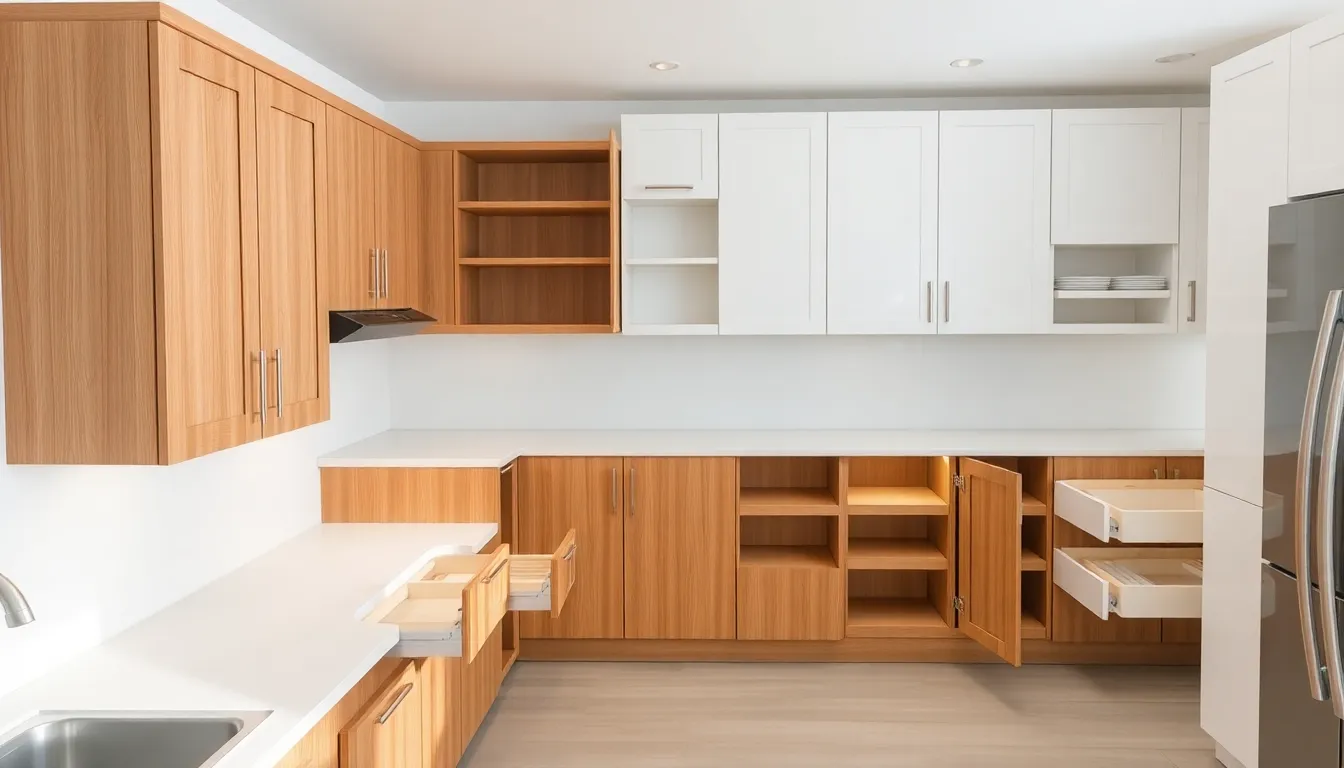
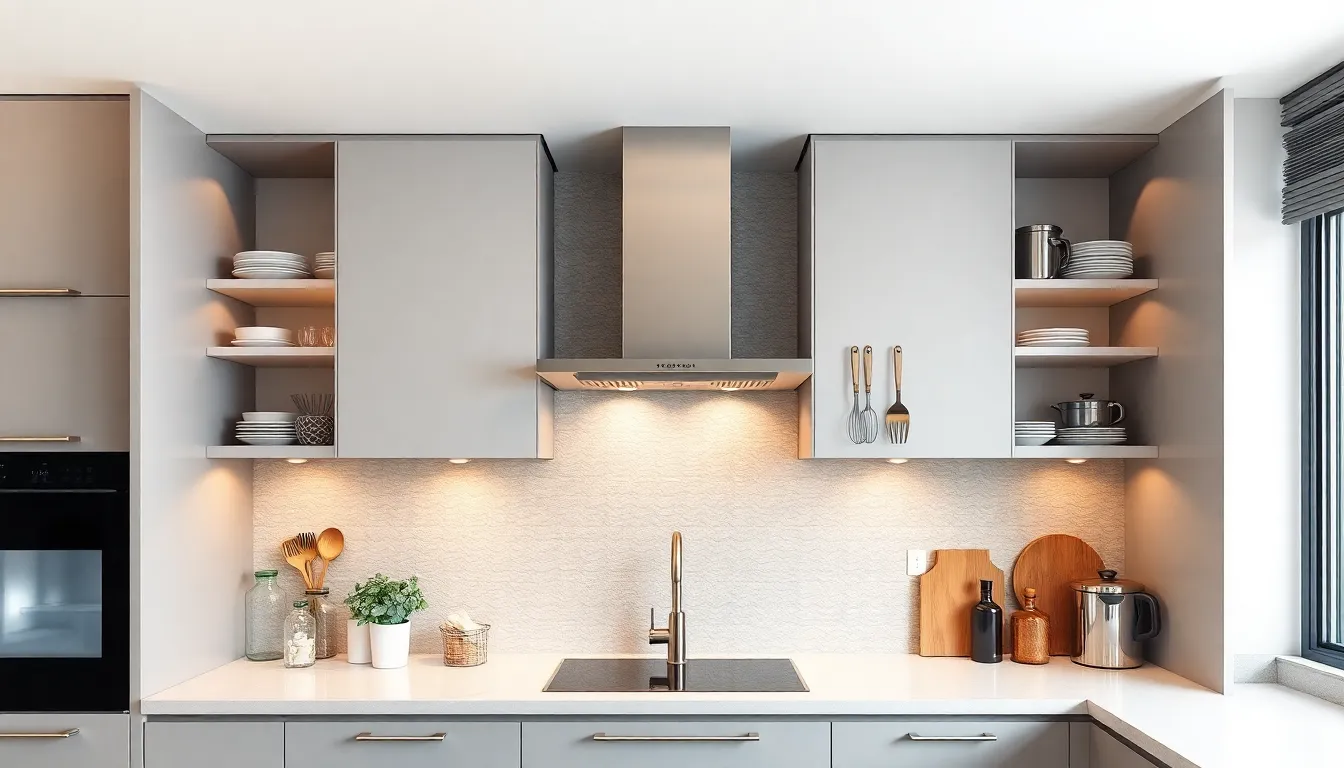
Various layouts optimize kitchen cabinet organization for efficiency and accessibility. Selecting the right type enhances the cooking experience.
Traditional Layouts
Traditional layouts maintain a classic approach, focusing on functionality and ease of use. Most people place cabinets above the countertop for easy access to frequently used items. Lower cabinets often house larger appliances and bulk items, maximizing storage. Drawer dividers organize utensils for quick retrieval. Generally, these layouts provide a familiar and comforting design, catering to multi-functional cooking.
Modern Layouts
Modern layouts emphasize minimalism and open spaces, often using sleek designs and innovative storage solutions. Cabinets feature clean lines and often blend into the overall aesthetic of the kitchen. Pull-out shelves and hidden compartments become common, enhancing accessibility while maintaining a tidy appearance. Vertical storage maximizes the use of wall space, allowing for an uncluttered countertop. These configurations prioritize efficiency and promote a streamlined cooking experience.
Customized Solutions
Customized solutions cater specifically to individual needs and preferences, allowing for personalized organization. Tailored cabinets accommodate unique kitchen shapes and sizes, creating a perfect fit. Various systems, such as lazy Susans and pull-out racks, optimize space utilization. Designers craft bespoke cabinets to handle specific appliances, maximizing both storage and accessibility. These unique designs foster a functional kitchen environment, guaranteeing easy access to essential items.
Key Elements of an Effective Layout
An effective kitchen cabinet organization layout prioritizes functionality and accessibility while ensuring aesthetic appeal. Considering these essential elements leads to a more efficient cooking space.
Space Utilization
Maximizing space enhances overall kitchen functionality. Vertical storage, such as tall cabinets or shelving, takes advantage of unused overhead areas. Deep drawers accommodate pots and pans, while pull-out shelves allow quick access to items in the back. Incorporating corner units like lazy Susans optimizes hard-to-reach spaces, making often-used utensils easily accessible. By organizing items based on frequency of use, every inch contributes to a clutter-free environment.
Accessibility Considerations
Ensuring easy access to kitchen essentials improves the cooking experience significantly. Placing frequently used items, such as spatulas and mixing bowls, within arm’s reach speeds up meal preparation. Lower cabinets should house heavier items to reduce strain when lifting them. Arranging cabinets according to cooking activities also enhances efficiency, like grouping baking supplies in one area for seamless access. Thoughtful placement prevents frustration, creating a more enjoyable and collaborative cooking environment.
Aesthetic Appeal
Creating an inviting and visually appealing kitchen supports a pleasant atmosphere. Choosing cabinet finishes that complement overall decor enhances the space’s look. Open shelving can display decorative dishes, adding personality to the kitchen. Harmonizing colors and textures throughout the cabinets creates unity. Strategically placed lighting accentuates attractive features, elevating both function and style. Prioritizing aesthetics encourages a warm and welcoming environment for family and guests.
Tips for Organizing Kitchen Cabinets
Effective organization significantly improves kitchen efficiency. Use these tips for a streamlined kitchen cabinet organization.
Decluttering Techniques
Start by removing all items from each cabinet. Carefully evaluate each item, deciding what to keep, donate, or discard. Group similar items together, allowing for easy access during meal prep. The process of sorting can reveal duplicates or unwanted items taking up space. Utilize storage boxes or bins for smaller items to maintain clarity within cabinets. Regularly revisit this decluttering step to ensure an organized space.
Storage Solutions and Accessories
Incorporate drawer dividers for utensils and tools, maximizing available space. Use pull-out shelves for deeper cabinets, enhancing visibility and access to items. Consider installing tiered organizers for spices, allowing for easy reach of all jars. Lazy Susans work well in corners, facilitating access to pots and pans. Magnetic strips can be used for storing knives or metal utensils, eliminating clutter on countertops. Finally, cabinet door racks can hold cutting boards and baking sheets, optimizing vertical space.
Maintenance Strategies
Plan a routine for reorganizing cabinets, ideally every season. Regular audits of inventory keep track of essentials and excess items. Clean shelves with mild soap and water to maintain a sanitary environment. Reseal or refresh storage containers, ensuring they remain effective and visually appealing. Encourage family members to return items to their designated spots after use, promoting consistency. Engage everyone in maintaining the system to cultivate a collaborative atmosphere in the kitchen.